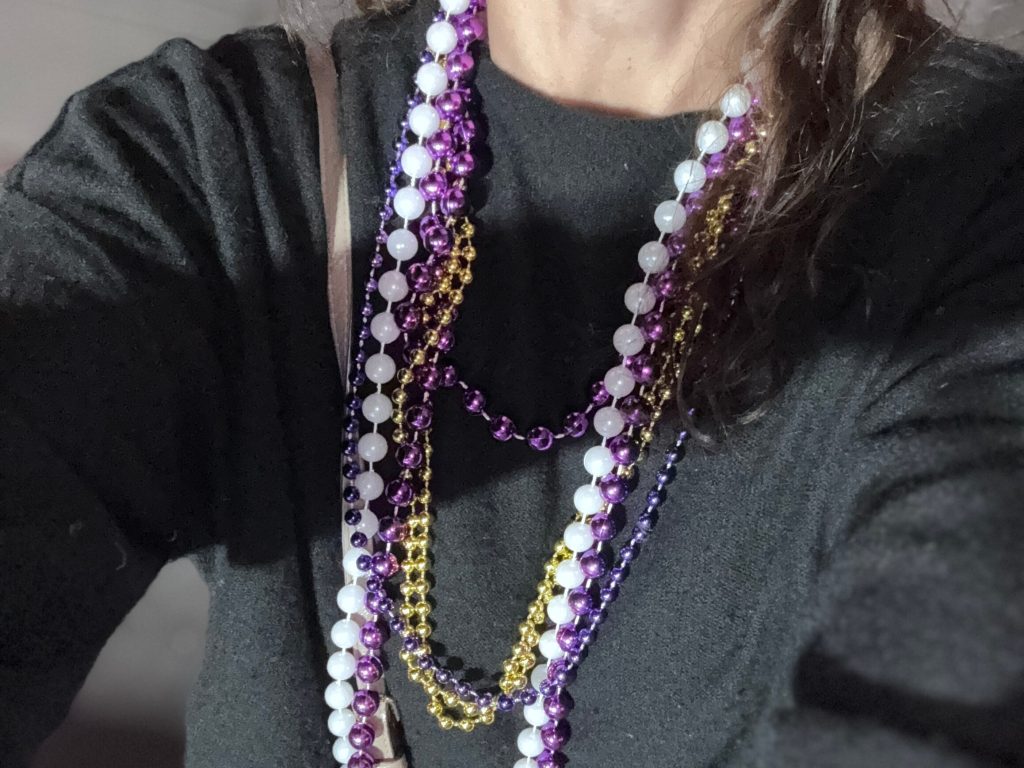
An Ode to Mardi Gras (and Celebrating for the Sake of it)
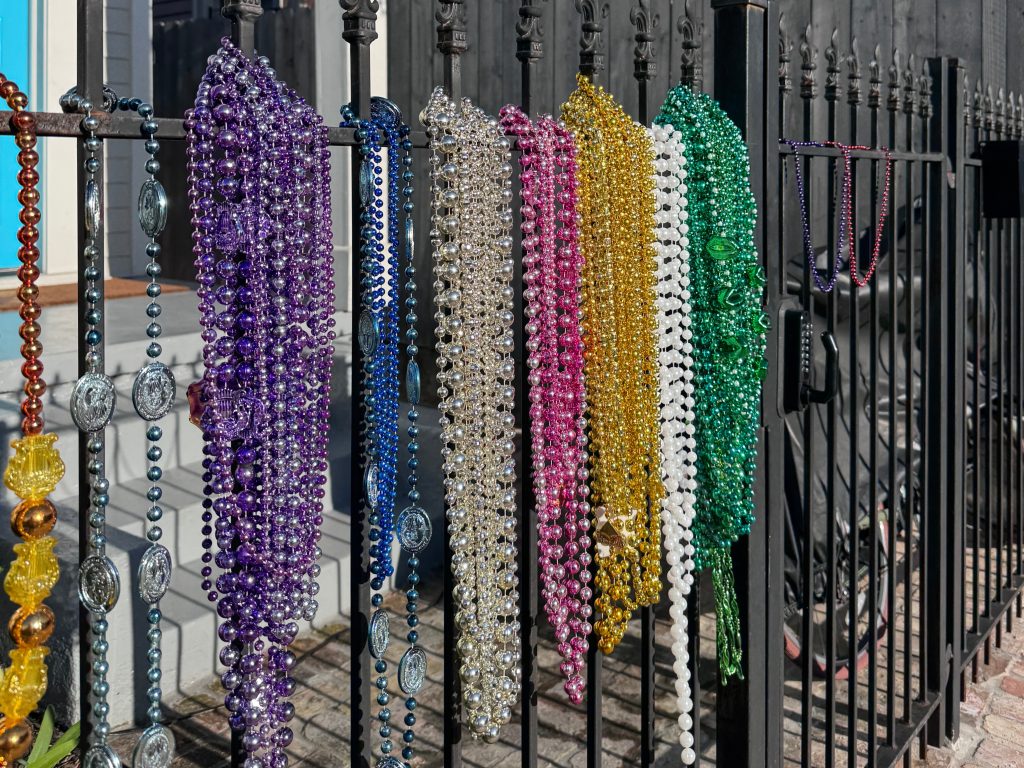
Mardi Gras was never an event I’d thought of attending. Much like massive celebrations like Pamplona’s San Fermín –which I opted to skip at 22 when all of my friends went–, the idea of drunken crowds filling the streets didn’t sound too appealing to me. Yet as destiny would have it, I’d end up developing a unique relationship to New Orleans.
Unlike its signature festival, New Orleans was a city I’d always wanted to go to. Back in 2022, it was the place where Justin (my now husband) and I made our relationship official –and where we got engaged last year. The city’s incredible cultural blend, its complex history, its laid-back attitude, and, of course, its incomparable food and drink landscape always call to us, and it has become one of our favorite spots.
This past February, we decided to try something new: a monthlong stay. We thought it could be fun to be locals for a few weeks, and why not do it during Mardi Gras?
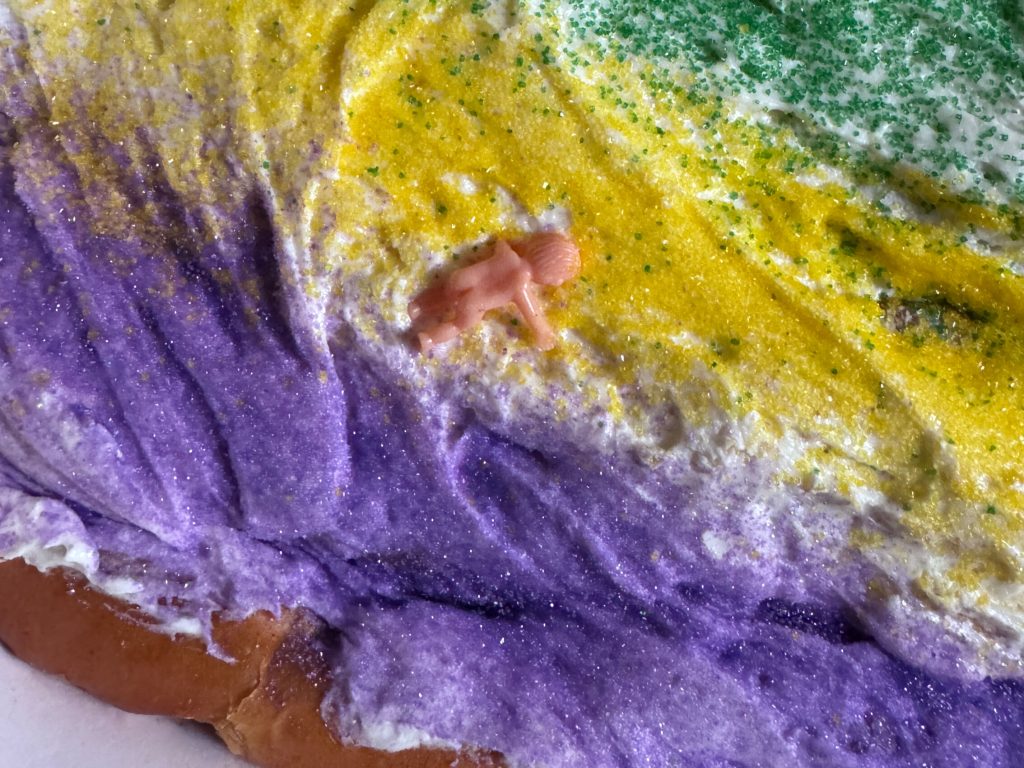
The first thing I learned upon landing is that while Mardi Gras officially occupies one day on the calendar –the last Tuesday before Lent, like many other carnival traditions around the world–, the celebrations begin weeks before. I arrived in New Orleans on January 28th, and I immediately detected all sorts of Mardi Gras motifs around me. The classic purple-green-and-gold theme –present in beads, wreaths, tinted light bulbs, and even repurposed Christmas trees– greeted me from homes, restaurants, and shops. Bars with balconies were offering prime parade-watching views, coffee shops were serving king cake lattes –a seasonal cake that vaguely resembles our own Mexican rosca de reyes and also features a plastic baby inside–, and a sense of cheer filled the air.
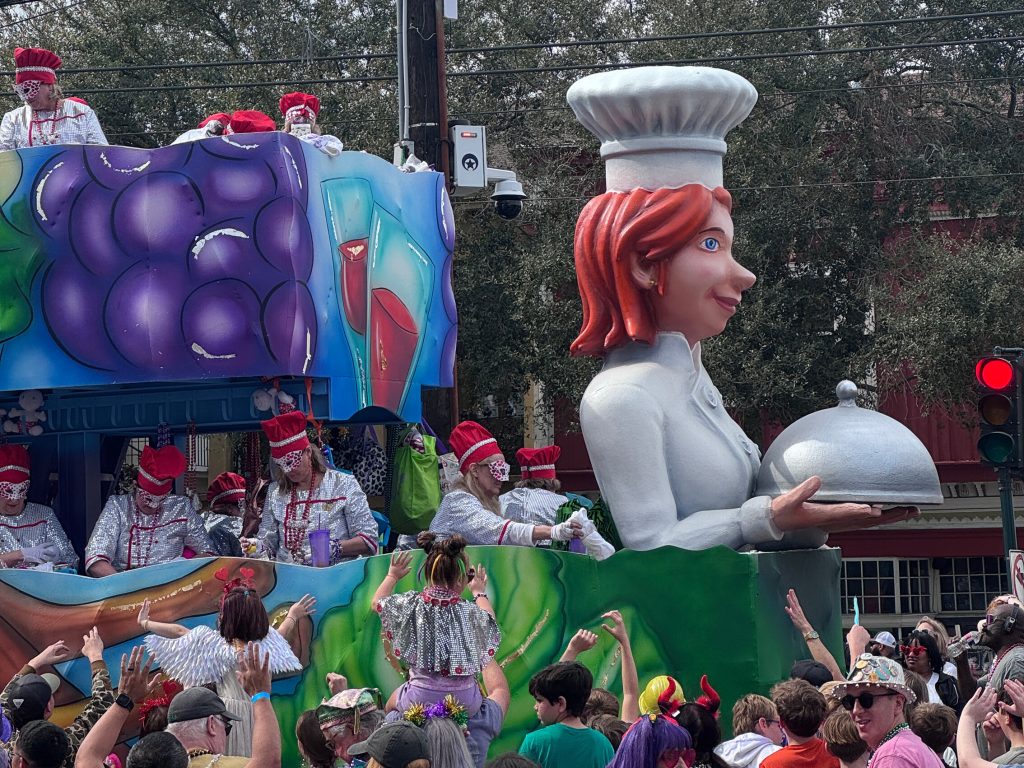
As I would find out that same weekend, there would be no lack of excuses to celebrate and party over the next three weeks. Our first experience was watching Krewe du Vieux, a satirical walking parade so fun that it made us forget it was 0 degrees Celsius outside (full disclosure: cocktails helped). Over the next few days, we stood on the sidewalk and cheered for an array of krewes, whose colorful, wildly creative floats traversed the streets of the city.
There are more than 30 krewes, ranging from funky, DYI walking parades to elaborate, stunning versions, each of them with their own style, history, and personality. Among our favorites were Endymion, the largest krewe in history; Muses, an incredibly diverse all-female group; and the music-inspired Bacchus, whose reigning monarch for 2026 was The Pitt’s Noah Wylie (and who seemed to be having a blast). Usually, parades also feature funky dance groups, talented school bands, and all sorts of whimsical additions, like animal-themed bikes, all of them in between eye-catching floats. From their floats, krewe members dance, wave, and most importantly, throw throws (that is not a typo).
Throws are wild. Tossed from the heights of each float, they may come in the form of sunglasses, stuffed toys, T-shirts, frisbees, and, of course, beads. So many beads. And people (ourselves included) go crazy for them. I learned from our local friends (and Mardi Gras spirit guides), Jamie and Zack, that there is a whole protocol to it, too. Apparently, it’s wise to make eye contact with the krewe member to ensure they aim toward you as they throw whatever goodie is available. Catching coveted throws, like Muses’ shoes, is a triumph. And if you and your neighbor are going for the same throw, most people will usually be really nice about it and let the other person have it. (Not everyone, though!)
That being said, there is a not-so-great aspect to it, and that is the trash. Oh my God, the trash. Between the throws that nobody catches and the stuff that nobody wants, there is usually a terrifying amount of garbage left on the streets after each parade. Add to that empty cups, beer cans, food wrappers, and fried chicken bones, and it is not a pretty sight.
On the bright side, I was thrilled to see a cool project called Recycle Dat!, focused on making Mardi Gras more sustainable. I spotted recycling containers for plastic bottles, cans, and beads at most parades and even hotels, which gave me a little hope. Some krewes are also switching to glass beads instead of plastic, which are not only more eco-friendly but also actually pretty cute (I kept those).
Most of all, I loved seeing the crowds each day, composed of literally everyone from families with small kids, groups of friends, flirty teenagers, drunk college kids, older people, and everything in between. Many of them camp out on the sidewalk hours before the parades start, installing impressive settings with tents, picnic tables, and even ladders for better views. Many of them dress up, too. Watching people with themed T-shirts and hats, homemade costumes, and sequin outfits that rivaled those seen on the floats made me feel severely underdressed.
It is this commitment to joy that really captured my heart. You don’t need me to tell you that we’re living in rough times, and sometimes it can feel hard or even trivial to celebrate. But I find the exact opposite to be true. I think celebrating for the sake of it gives us a much-needed break from the darkest aspects of our reality, and reminds us that there are still reasons to believe that we’re all in this together. We’re only here for a short time, so let’s dance on the streets, cheer for no reason, and eat plenty of cake.